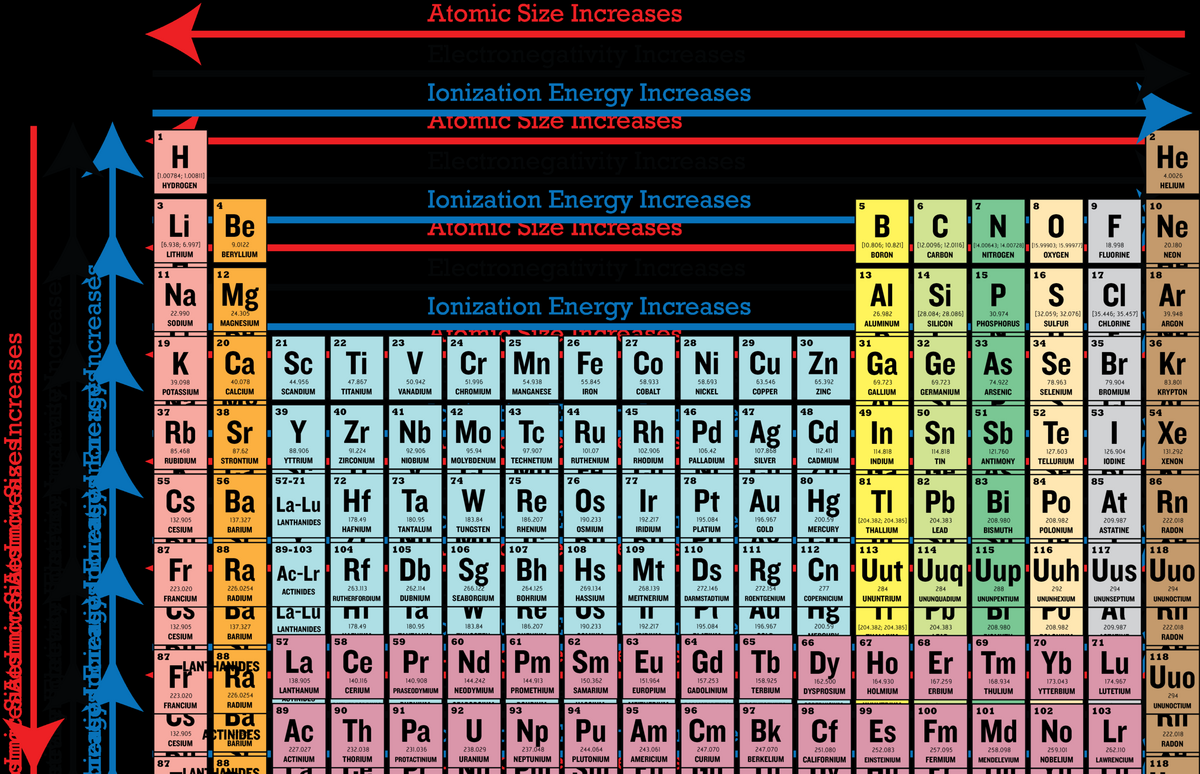
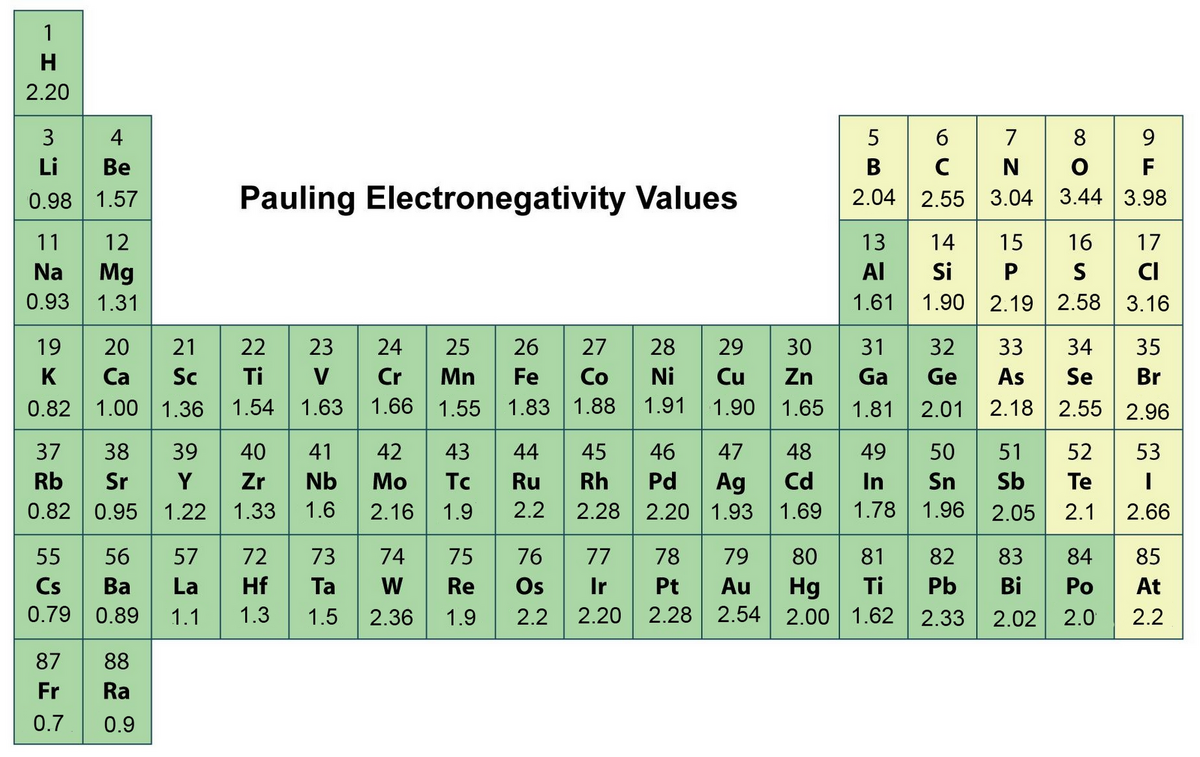
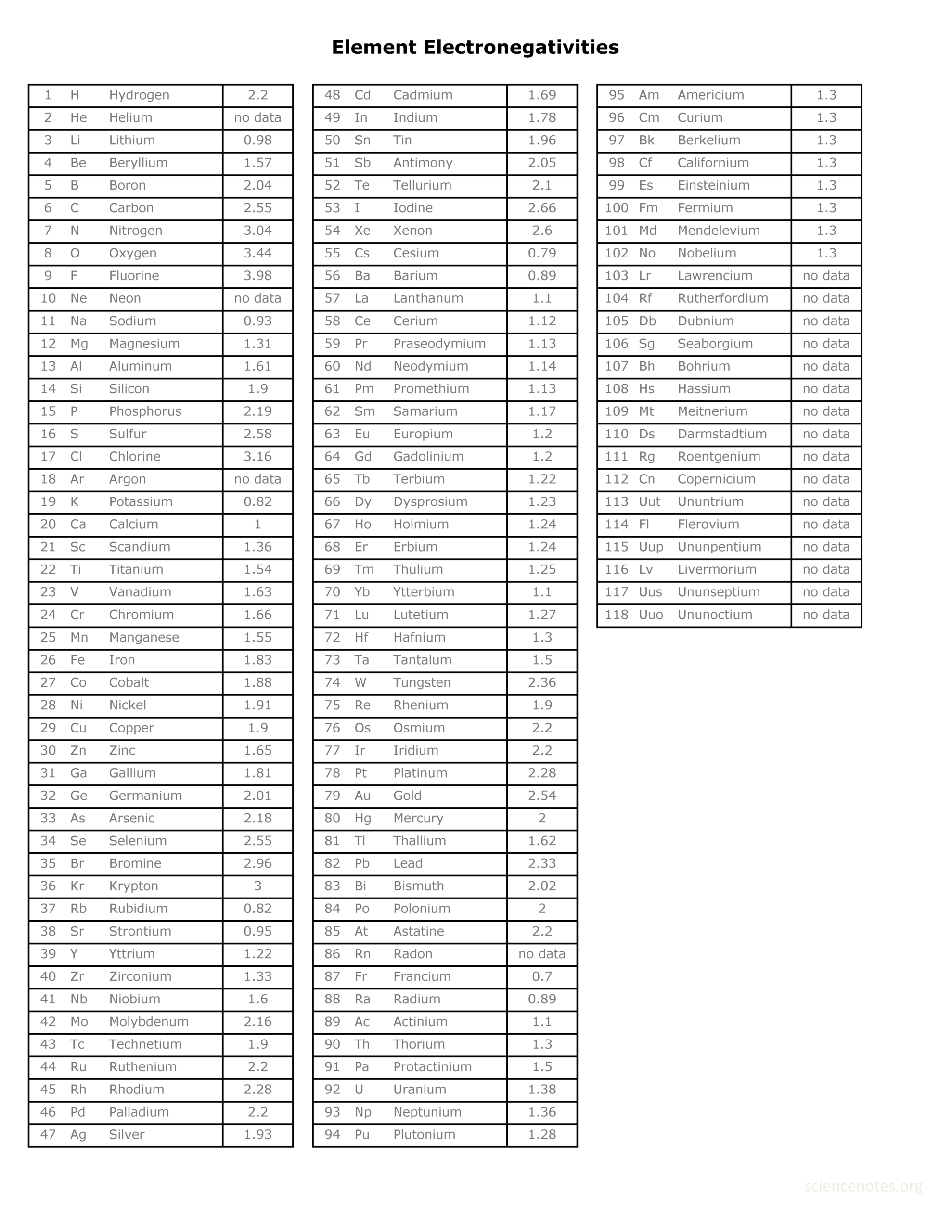
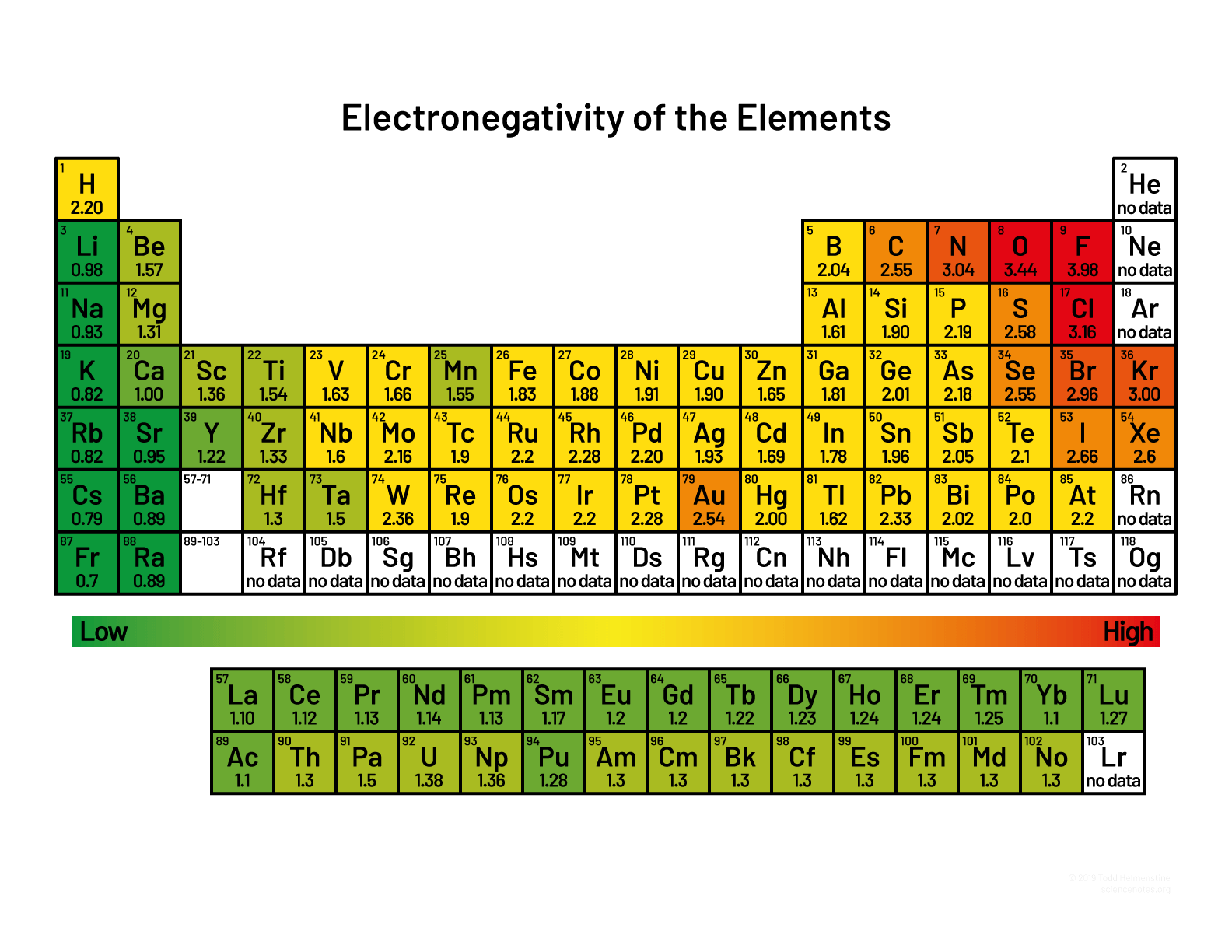
Chemistry can be a complex and daunting subject, especially when it comes to understanding the properties of different elements. One key concept in chemistry is electronegativity, which refers to the ability of an atom to attract electrons in a covalent bond. Understanding electronegativity is crucial in predicting the behavior of molecules and their reactions. A useful tool in mastering this concept is an electronegativity chart, which provides a visual representation of the electronegativity values of different elements.
For students and chemistry enthusiasts, having access to a reliable and easy-to-understand electronegativity chart is essential. Fortunately, there are many resources available that offer free printable electronegativity charts. These charts can be used as a quick reference guide to look up the electronegativity values of different elements, making it easier to understand and predict chemical reactions. With a free printable electronegativity chart, you can study and learn chemistry concepts at your own pace, without having to worry about expensive textbooks or online subscriptions.
Pin Page Worksheets Library
What is Electronegativity?
Electronegativity is a measure of an atom’s ability to attract electrons in a covalent bond. It is typically measured on the Pauling scale, which ranges from 0 to 4.0. Elements with high electronegativity values, such as fluorine and oxygen, tend to attract electrons more strongly than elements with low electronegativity values, such as hydrogen and carbon. Understanding electronegativity is important in predicting the polarity of molecules and their reactivity.
PERIODIC TABLE ELECTRONEGATIVITY NOBLE GASES PAULING Worksheets Library
How to Use an Electronegativity Chart
Using an electronegativity chart is relatively straightforward. Simply look up the elements involved in a chemical reaction and compare their electronegativity values. If the difference in electronegativity values is large, the bond between the elements is likely to be polar, meaning that one element has a partial positive charge and the other has a partial negative charge. On the other hand, if the difference in electronegativity values is small, the bond is likely to be nonpolar, meaning that the elements share electrons more equally.
Benefits of a Free Printable Electronegativity Chart
A free printable electronegativity chart offers several benefits for students and chemistry enthusiasts. For one, it provides a convenient and easy-to-use reference guide that can be consulted quickly and easily. Additionally, a printable chart can be used to create flashcards or other study aids, making it easier to memorize and recall electronegativity values. Perhaps most importantly, a free printable electronegativity chart makes it possible to learn and study chemistry concepts without having to spend money on expensive textbooks or online subscriptions.
Electronegativity Chart PDF
Electronegativity Definition And Trend
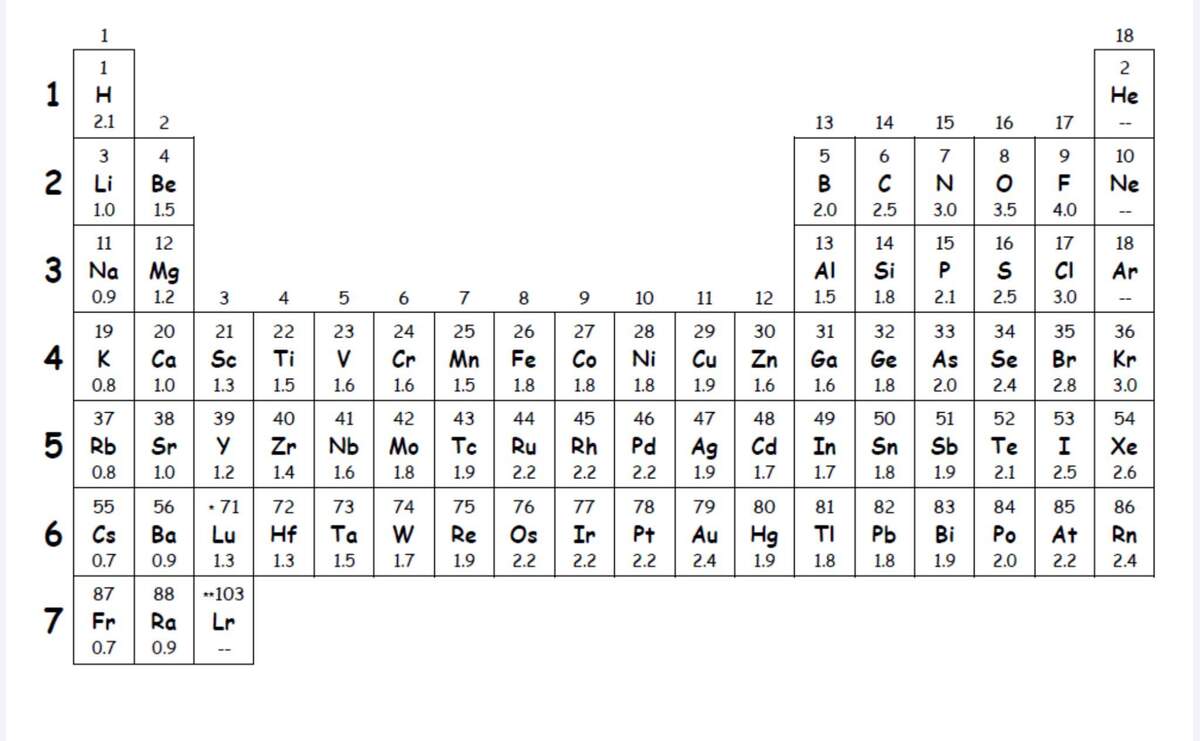
An Electronegativity Chart Written In Comic Sans For When You Teach Your 5 Year Old About Molecular Geometry And Bond Dipoles R CrappyDesign